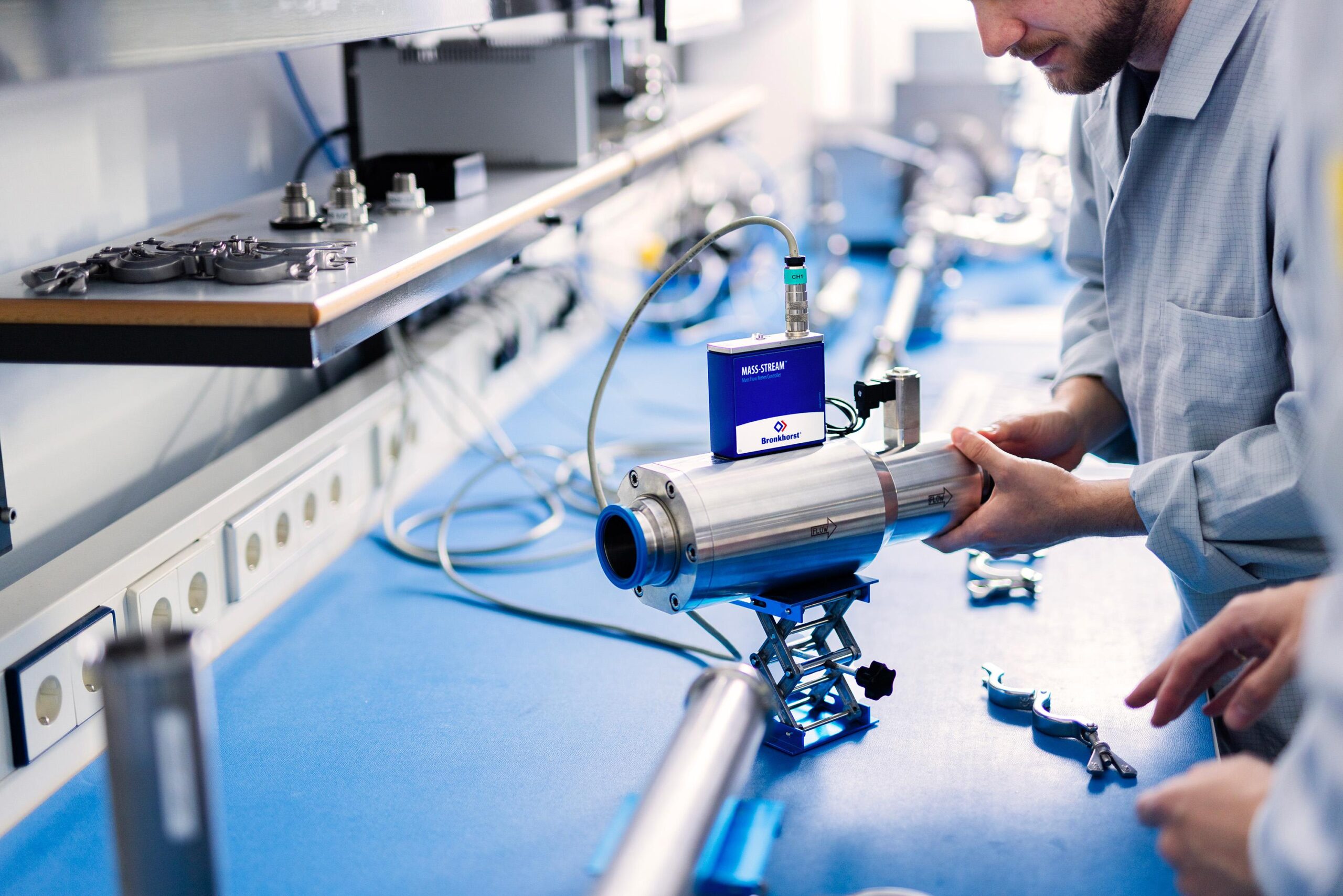

As pharmaceutical manufacturers continue to seek greater precision, efficiency and quality assurance in production processes, Bronkhorst UK is seeing increasing demand for its low-flow measurement and control technologies across the life sciences sector.
The company, which established its UK operation in 2002, specialises in instruments that measure and control the flow of liquids and gases used in manufacturing and research environments. While its technologies serve a broad range of industries, pharmaceuticals have become an increasingly important area of application.
According to Marc Wellington, general manager of Bronkhorst UK, ongoing innovation in drug development and manufacturing is creating new opportunities for advanced flow control solutions.
Low-flow liquid and gas systems play a critical role throughout pharmaceutical production, from dosing active ingredients and additives to supporting laboratory research, process development and quality control. As medicines become more complex and regulatory requirements tighten, manufacturers are placing greater emphasis on accuracy and repeatability.
To meet these demands, Bronkhorst offers liquid flowmeters and controllers capable of delivering both continuous flows and highly accurate dosing. The company's gas flow instruments can measure and control extremely low flow rates, helping ensure consistency in sensitive pharmaceutical processes.
Many of the firm's instruments utilise Coriolis technology, which directly measures mass flow, density and temperature.
This approach provides precise dosing and process control, making it particularly suited to pharmaceutical manufacturing, bioprocessing and life sciences research applications where product quality and batch consistency are paramount.
From its base in Newmarket, Suffolk, Bronkhorst UK also provides application engineering support, calibration, training and after-sales services, helping pharmaceutical companies optimise process performance and maintain compliance throughout the production lifecycle.
Bronkhorst sees growing role for low-flow technology in pharmaceutical manufacturing