
Mills and animal feed producers are increasingly turning to automation as they seek to improve productivity, maintain product quality and address ongoing labour shortages.
According to TMI and SSB Wägetechnik, the decision to automate bagging operations is becoming a key strategic consideration for businesses handling flour, grain, meal and animal feed.
Growing production volumes, tighter quality requirements and difficulties recruiting skilled workers are placing additional pressure on packaging operations across the sector. At the same time, businesses are under increasing pressure to improve hygiene standards, reduce waste and enhance operational efficiency.
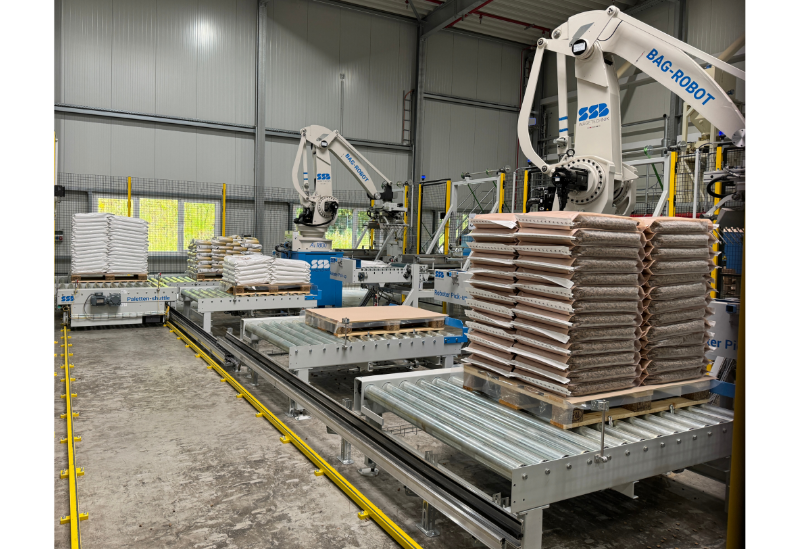
While semi-automatic and fully automatic bagging systems both offer automated dosing and weighing, they differ significantly in how bags are handled. Semi-automatic systems still require operators to position empty bags before filling, whereas fully automated lines complete the entire process, from picking up and opening empty bags to filling, sealing and transferring them for palletising.
The benefits of automation can be substantial. Automated systems deliver consistent production speeds, improved planning reliability and greater process stability, particularly in high-volume or multi-shift operations.
Precise bag positioning and weighing also help ensure accurate fill weights and reliable sealing, reducing product losses, rework and downtime. Automation can also improve workplace conditions.
By reducing the need for manual bag handling, operators have less direct exposure to dusty products such as flour and feed ingredients, while physically demanding repetitive tasks are minimised.
However, the move to full automation requires careful evaluation. Initial investment costs are higher than for semi-automatic systems, and additional space is needed for bag feeding and handling equipment. Businesses must also consider maintenance requirements and employee training needs.
According to TMI and SSB Wägetechnik, automation becomes particularly attractive where large production volumes, rising labour costs or recruitment challenges are affecting operational performance. Modular system designs can also enable companies to expand capacity over time, helping future-proof packaging operations while spreading investment costs across multiple phases.
Based on these trends, automation is playing an increasingly important role in helping mills and feed producers improve efficiency, maintain quality standards and remain competitive in a changing market.
Automation drives efficiency in milling and feed packaging