

Manufacturers and engineering specialists are being warned that poor belt cleaner placement continues to undermine conveyor efficiency, with structural constraints, limited space and inadequate access preventing cleaners from being installed in the correct positions.
Industry guidance from the Conveyor Equipment Manufacturers Association (CEMA) sets out clear definitions for cleaner positioning.
Primary cleaners are located according to head pulley diameter and the point at which material leaves the belt.
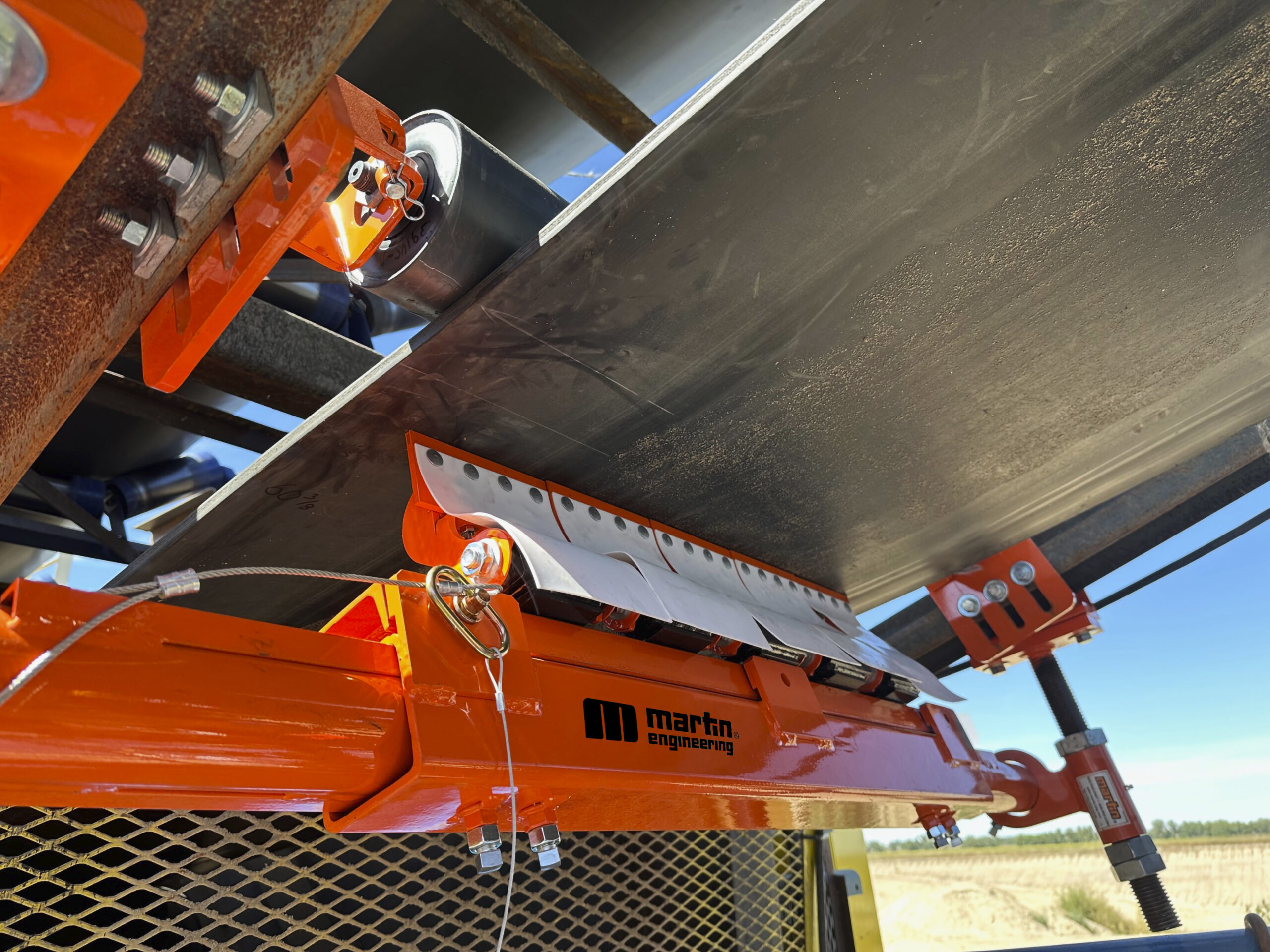
Secondary cleaners should be installed between the head pulley and the snub pulley on the return run.
However, many conveyor structures provide only a short belt section in this area, leaving insufficient room for secondary cleaner designs and restricting maintenance access.
The problem is compounded by designers prioritising platforms around major components rather than around belt cleaners, despite cleaners requiring more frequent inspection and adjustment to maintain optimal blade pressure.
Engineering specialists say several design decisions are contributing to the issue.
A default drive pulley wrap angle of 210 degrees – created by snub pulley positioning – is often applied out of habit rather than necessity.
This configuration can make mounting secondary cleaners difficult and routine maintenance almost impossible.
Updated engineering design software using DIN or CEMA tension calculations is recommended to determine whether such wrap angles are genuinely required.
Selecting larger head pulleys is also being highlighted as a practical measure. Although minimum‑diameter pulleys may reduce upfront costs, the US Mining Safety and Health Administration (MSHA) reports that up to 85% of maintenance problems stem from fugitive materials.
Larger pulleys can accommodate two primary cleaners and provide sufficient snub‑pulley space for additional secondary cleaners, significantly reducing spillage and associated maintenance.
Access remains a critical concern. Maintenance personnel can spend up to a third of their time reaching equipment, and designing platforms to minimum walkway standards increases long‑term costs.
Engineers are urging designers to prioritise ergonomic access to belt cleaners to support faster, safer maintenance.
Motorised drive pulleys are also being promoted as an option that reduces weight, improves energy efficiency and frees space for cleaner installation. With rotating components housed inside the pulley, external stub shafts require minimal mounting space.
Industry experts stress that belt cleaners must be installed within millimetres to avoid belt damage and ensure optimal performance. Professionally trained installation is being recommended to ensure accuracy and maintain clean chute areas.
The sector is being reminded that correct specification, placement and access are essential to reducing fugitive material, improving compliance and lowering long‑term operating costs.